A Black Utopia? Social stratification in Nineteenth-century Colonial Sierra Leone.
The association between institutions and social stratification is a matter of great debate in current days. Historical research can help illuminate not only how societies came to be what they are, but also to provide a test of hypotheses over theories concerned with the development and determinants of inequality. Because institutions contribute to inequality by setting the rules of allocations of resources, it is important to understand what factors may determine institutional set up and, ultimately, inequality.
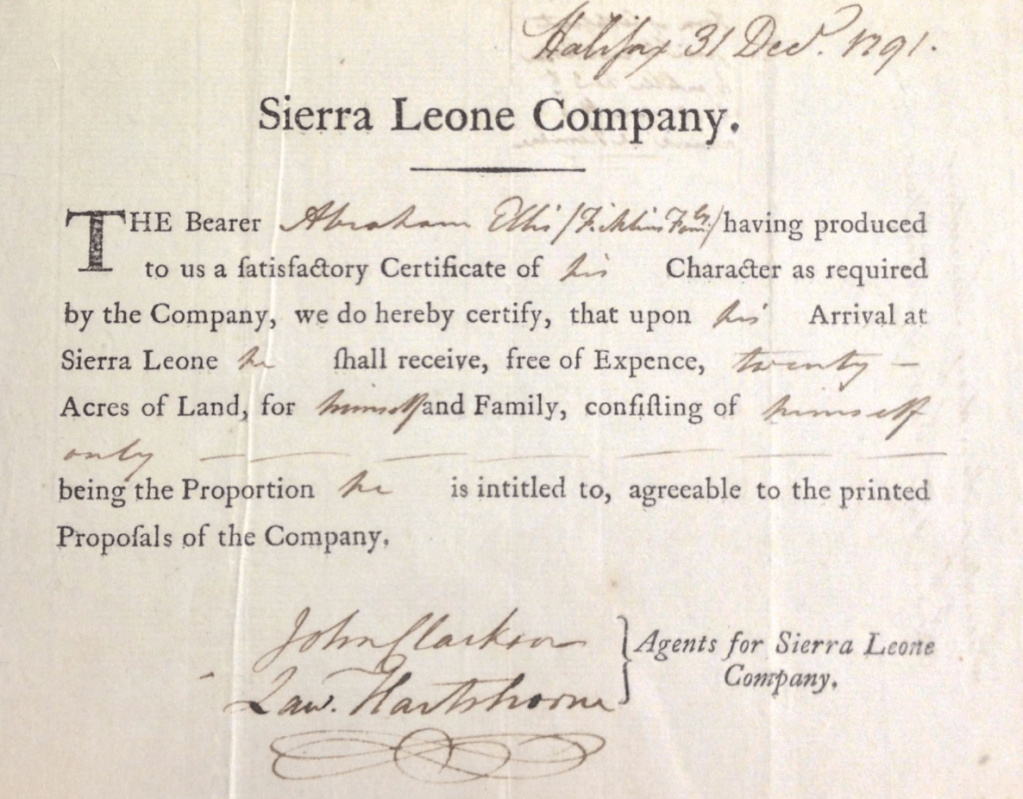
The project focuses on providing novel evidence on the association between institutions and social stratification by examining the claim that ideas are important in shaping institutions and in turn social stratification by relying on the case of early nineteenth century colonial Sierra Leone. The colony had allegedly been founded on egalitarian ideals and settled by a heterogenous population of former slaves; these characteristics provide for a critical test for theories of inequality.
The findings of the project suggest that early nineteenth-century colonial Sierra Leone is among the most equal societies so far studied under most perspectives. This is the result of an institutional set-up influenced by those egalitarian ideals the colony had been allegedly founded upon. The project thus paints a picture of colonialism in Africa that differs from that often discussed in the literature and shows that benevolent institutions could be established not only there were Europeans settled in large numbers but also in the “White Man’s grave” itself. This ultimately casts doubt over institutional theories arguing for the primacy of factor endowments over other elements.
 Stefania Galli